
A live deposit should follow an understanding of the account, its costs, and the losses that trading could produce.
Understand the currency pair before the trade
A forex quote compares two currencies. In EUR/USD, the euro is the base currency and the US dollar is the quote currency. A hypothetical price of 1.1000 means one euro is valued at 1.10 US dollars.
A long EUR/USD position benefits from an increase in the quoted price, before costs. A short position benefits from a decrease. An adverse move creates a loss. The monetary result depends on the position size, the size of the price movement, and the account's contract terms.
Opening a trading account is different from exchanging dirhams for travel. Depending on the provider, the instrument may be a leveraged forex contract or a CFD rather than currency held for personal use. Confirm which product you will trade.
Learn the figures that determine exposure
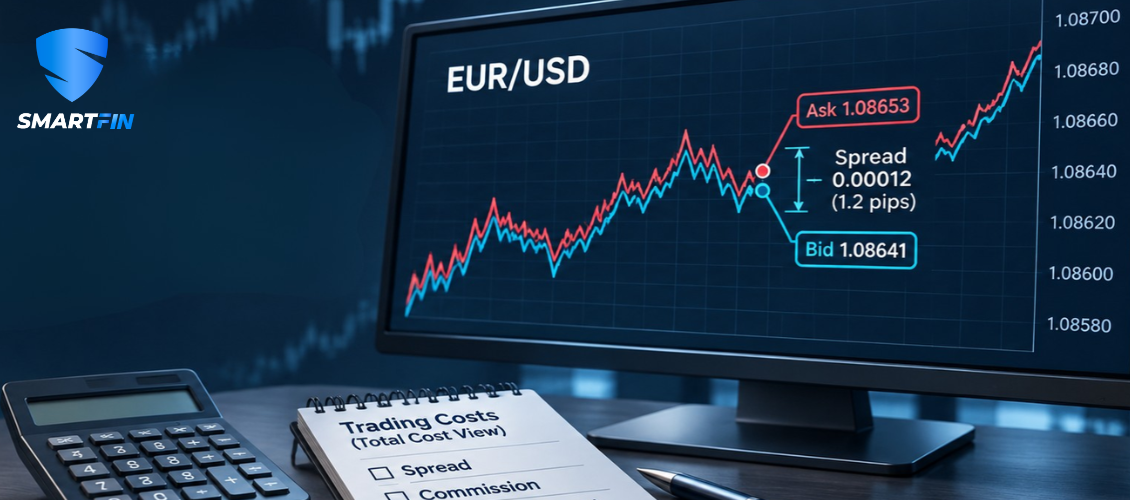
A lot describes trading volume, while the contract specification explains what that volume represents. Spread is the difference between the quoted bid and ask prices. Margin is the capital required to support a position. Leverage expresses the relationship between exposure and required margin.
A small margin requirement can support a much larger position. It does not mean the potential loss is limited to that margin. Before choosing volume, read SmartFIN's explanation of forex margin and leverage.
Write down the proposed position size, planned exit, and estimated loss if that exit is reached. Include trading costs. An ordinary stop-loss may execute at a different price during a gap or fast market, so the estimate is not a guaranteed maximum loss.
Practice an entire trade cycle
Demo practice should include opening a position, setting and changing an exit order, closing the position, and reviewing the history. Also observe how equity and free margin change while the trade remains open.
Keep a short record: why you entered, which price would invalidate the idea, how much the planned loss would be, and whether you followed the plan. These tasks are more informative than watching a virtual balance rise.
SmartFIN's demo versus live account guide explains why simulated results should not be treated as evidence of future live performance.
Check the provider before funding
Identify the legal entity named in the client agreement. Confirm its relevant permissions, who receives your money, who executes trades, and where complaints should be directed. Ask for the complete fee schedule, withdrawal procedure, and margin rules.
Use the forex broker selection checklist to organize those questions. A recognizable platform or local office alone does not establish the terms of your account.
Can a complete beginner learn forex?
Yes. Start with quotes, exposure, costs, and order handling. Understanding those concepts does not guarantee profitable trading.
Do I need to deposit money to learn the platform?
A demo account generally allows practice with virtual funds. Its availability and settings depend on the provider.
Next step: Contact SmartFIN to request the applicable account information and available practice options before considering a live deposit.
This article provides general education, not personalized investment advice. Leveraged forex and CFDs carry a high risk of loss.