
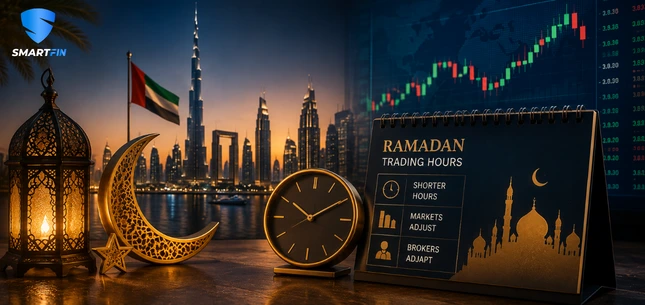
During Ramadan, UAE working hours shorten under federal and local government guidance, and many banks, exchanges and brokers adjust their own operating hours accordingly. Global forex and gold markets don't stop for Ramadan, but liquidity and volatility patterns during the UAE trading day often shift, since regional trading desks are active for fewer hours and around different times.
What Actually Changes During Ramadan
- UAE public and private sector working hours are typically shortened by local authority guidance each year
- Regional bank and brokerage support hours often shift earlier in the day
- Regional trading activity may concentrate into a narrower window, which can thin liquidity at times it wouldn't normally
- Global sessions — London, New York — continue on their normal schedule regardless of the UAE calendar
How This Affects Forex and Gold Liquidity
Because major forex and gold liquidity is driven by London and New York trading hours, the core global market structure doesn't change during Ramadan. What can change is the depth of regional activity around the Gulf trading window, and the timing of any region-specific news or announcements. Pairing this guide with Trading During Dubai Market Hours and Best Time to Trade XAU/USD in Dubai gives a fuller picture of session timing throughout the year.
Adjusting Your Trading Routine
- Expect your own available trading hours to shift if your work schedule changes during Ramadan
- Recheck the economic calendar for release timing converted correctly to Gulf Standard Time (UTC+4)
- Consider reduced position sizes during any period where you're trading with less attention or shorter windows than usual
UAE Holidays and Market Impact Beyond Ramadan
Ramadan is one of several recurring UAE calendar events that affect regional trading activity without stopping the global markets outright. For the fuller annual picture, see UAE Public Holidays and Their Impact on Forex and Gold Markets, and check our pillar guide CMA (SCA) Regulation Explained for the broader compliance picture.
Frequently Asked Questions
Do global forex markets close during Ramadan?
No. Forex and CFD markets tracked against London and New York trading hours continue on their normal weekly schedule; only regional UAE working hours and support availability typically shorten.
Does Ramadan increase market volatility?
Not inherently, though regional liquidity can thin during certain hours, which can occasionally amplify moves around scheduled news releases. Broader volatility is still driven mainly by global economic data and events.
Will broker customer support hours change during Ramadan?
Many UAE-based brokers adjust support hours during Ramadan in line with shortened regional working hours — check your broker's specific announcement each year rather than assuming standard hours apply.
Should I trade differently during Ramadan?
Many traders simply adjust for their own shifted schedule and stay alert to any thinner regional liquidity windows, while continuing to follow the same risk management approach they use the rest of the year.
Check current session times and set alerts on your account dashboard after you open a live account.