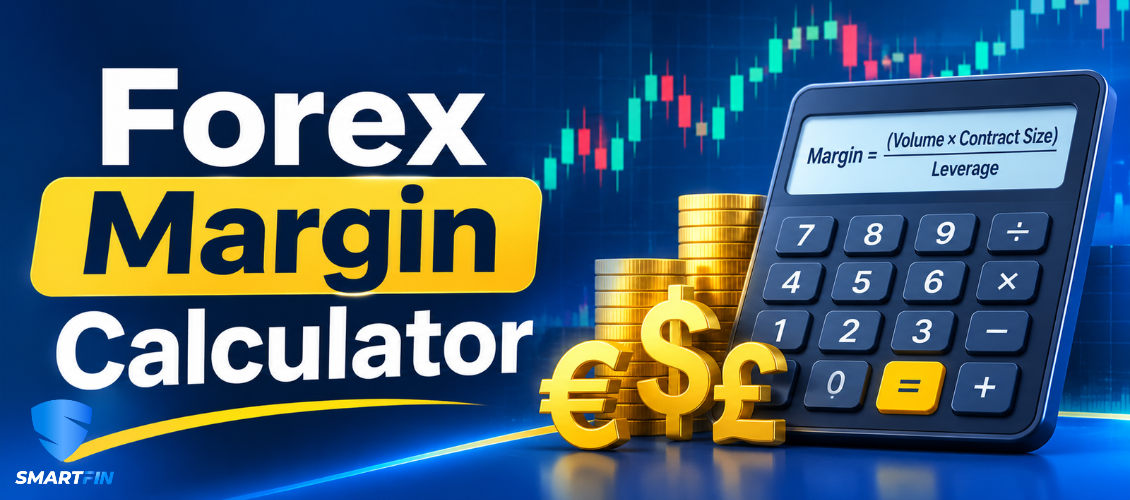
Use a margin calculator to estimate your trading requirements based on position size, market price, and leverage.
Forex Margin Calculator
Calculate your estimated margin before entering a trade.
Your calculator should include these inputs:
- Trading instrument
- Trade volume (lots)
- Current market price
- Leverage
- Account currency
Calculation results:
- Trade notional value
- Required margin
- Margin percentage
Note: Results are estimates. Actual margin requirements depend on the instrument specifications, account currency, leverage, and broker's trading conditions.
What Is Margin in Forex Trading?
Margin is the amount of money required in a trading account to open and maintain a leveraged position. It acts as security for the position rather than a separate trading fee.
For example, if a trader opens a position with a notional value of $10,000 using 1:100 leverage, the estimated required margin is $100.
Understanding margin is important because it helps traders determine how much of their account equity is committed to their open positions.
How to Calculate Forex Margin
A simplified formula for calculating margin is:
Required Margin = Trade Notional Value ÷ Leverage
Example:
| Trade notional value | $10,000 |
| Leverage | 1:100 |
| Required margin | $100 |
The calculation may differ depending on the instrument's contract size, market price, account currency, and applicable margin requirements.
How Does Leverage Affect Margin?
Leverage determines the amount of market exposure available relative to the required margin.
Consider a position with a notional value of $10,000:
Leverage & its Estimated Margin!
| 1:20 | $500 |
| 1:50 | $200 |
| 1:100 | $100 |
| 1:200 | $50 |
| 1:500 | $20 |
Higher leverage reduces the initial margin required for the same position size. However, it also increases exposure relative to account equity and can magnify losses.
Margin, Free Margin and Equity: What's the Difference?
These three terms are important when monitoring an MT5 trading account.
Used Margin: The funds allocated to support open trading positions.
Free Margin: The remaining equity available to support additional positions or absorb trading losses.
Equity: Your account balance adjusted for the unrealized profit or loss of open positions.
Margin Level: The ratio of account equity to used margin, expressed as a percentage.
Margin Level = (Equity ÷ Used Margin) × 100
Understanding these values helps traders monitor their account exposure and manage available funds.
Why Should You Calculate Margin Before Trading?
Calculating margin before opening a position helps you understand how much of your available equity will be committed to a trade.
It is particularly useful when:
- Opening multiple trading positions.
- Trading gold and other volatile instruments.
- Using different leverage levels.
- Managing several open positions simultaneously.
- Planning your account exposure before entering the market.
Remember that having sufficient margin to open a position does not mean the trade is financially suitable for your account.
Frequently Asked Questions
1. Is forex margin the same as a trading fee?
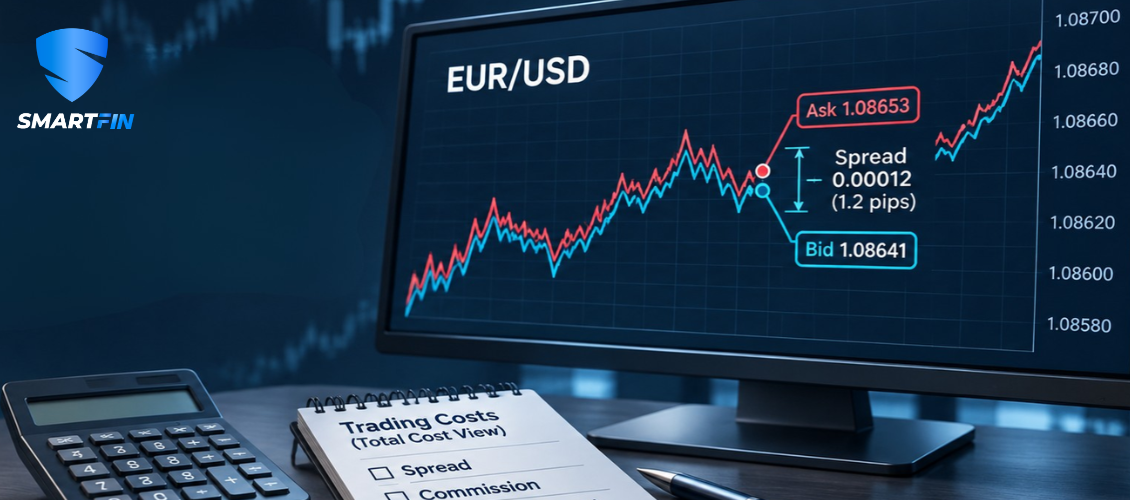
No. Margin is the amount required to support a leveraged position. Spreads, commissions, and overnight swap charges are separate trading costs.
2. Does higher leverage reduce required margin?
Generally, yes. For the same position notional value, higher leverage reduces the initial margin requirement, subject to the instrument and broker's margin rules.
3. Can I calculate margin for gold trading?
Yes. A calculator can estimate gold trading margin when it accounts for the applicable contract size, market price, leverage, and account currency.
4. Does MT5 calculate margin automatically?
MT5 displays margin information based on the connected broker's instrument specifications and account conditions. A margin calculator can help estimate the requirement before placing an order.
5. Can I lose more than my used margin?
Depending on the instrument, market conditions, account terms, and applicable negative balance protection, losses may exceed the initial margin allocated to a position.
Explore MT5 Trading with SmartFin
Understanding margin is an important part of managing leveraged trading positions. SmartFin provides access to MT5 trading services across supported financial instruments, allowing traders to explore forex, gold, and other markets.
Before opening a trading account, understand the applicable leverage, contract specifications, margin requirements, and associated trading costs.
Start by understanding your trading requirements before entering the financial markets.
Risk Disclaimer: Forex and CFD trading involves significant risk and may not be suitable for all investors. Leverage can magnify both profits and losses. Margin calculations are indicative and do not guarantee that a position can be opened or maintained.