What Is Forex Trading?
Every currency has a value compared to another currency — like the US dollar compared to the euro. Forex trading means guessing whether that value will go up or down, and making a trade based on your guess.
You don't need to physically exchange money. You're just trading on the price movement using an online platform.
Why Do People in the UAE Trade Forex?
- Good timing. Dubai's time zone overlaps with major trading hours in Europe and Asia, so the market is active during a convenient part of the day.
- It's legal and regulated. UAE authorities like the Securities and Commodities Authority (SCA) oversee forex trading, so there are rules in place to protect traders — as long as you use a properly licensed provider.
- No personal tax on profits. Individuals in the UAE don't pay tax on trading profits.
The Basic Words You Need to Know
You'll see these terms everywhere, so it helps to know them early:
- Pip – the smallest price move in a currency pair
- Spread – the small cost built into every trade (the gap between buy and sell price)
- Leverage – trading with more money than you actually deposited
- Margin – the amount of your own money needed to open a trade
- Stop-loss – a setting that automatically closes your trade if it loses too much
You don't need to memorize definitions perfectly. You just need to understand them well enough to use them.
Step-by-Step: How to Get Started
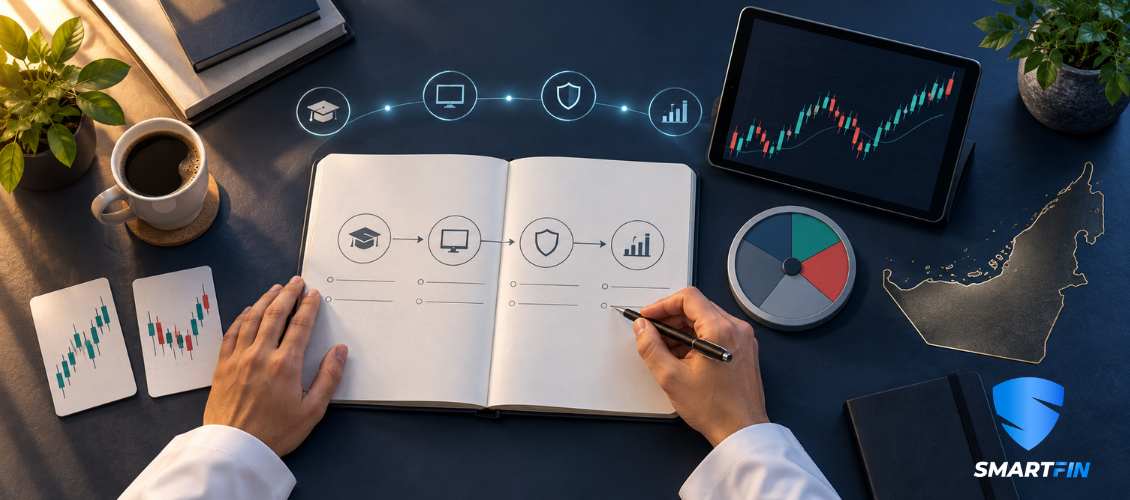
1. Learn the basics first. Spend a little time understanding how trades work before you touch real money. Free guides, videos, and demo accounts are the easiest way to do this.
2. Practice on a demo account. A demo account lets you trade with fake money, using real market prices. This is the safest way to learn. Practice until placing a trade feels normal, not confusing.
3. Pick a regulated provider. Before opening an account, check:
- Their official license number
- Who regulates them (for example, SCA or another recognized authority)
- Whether your money is kept safe in a separate account
Don't assume a company is licensed just because it has a Dubai office or UAE phone number. Always check.
4. Understand leverage before you use it. Leverage can boost your profits — but it can boost your losses just as fast. Start with lower leverage until you're confident, not the highest number available.
5. Only risk a small amount per trade. A common rule: don't risk more than 1–2% of your account on a single trade. This way, a few losing trades won't wipe you out.
6. Always use a stop-loss. Set it before you enter the trade, not after. This protects you if the market moves against you.
7. Start with one currency pair. Don't try to trade everything at once. Pick one pair (like EUR/USD) and get comfortable with how it moves before adding more.
Common Beginner Mistakes to Avoid
- Trading without a stop-loss
- Risking too much on one trade
- Using very high leverage before you're ready
- Trading too often out of boredom
- Increasing your trade size after a loss to "win it back"
Simple Checklist Before Your First Real Trade
- I understand pips, spreads, leverage, and stop-loss
- I've practiced on a demo account
- I've checked that my provider is properly regulated
- I know how much I'm willing to risk per trade
- I always set a stop-loss
You don't need to know everything before you start — you just need to start carefully. Learn the basics, practice first, protect your money with small risk per trade, and build from there.
Forex trading carries a high level of risk and isn't right for everyone. This guide is for general information only, not financial advice. Always check the risk warning and terms of your provider before trading.