Decide which losses you can afford before selecting exposure, rather than using the deposit requirement as a trading budget recommendation.
Three amounts that answer different questions
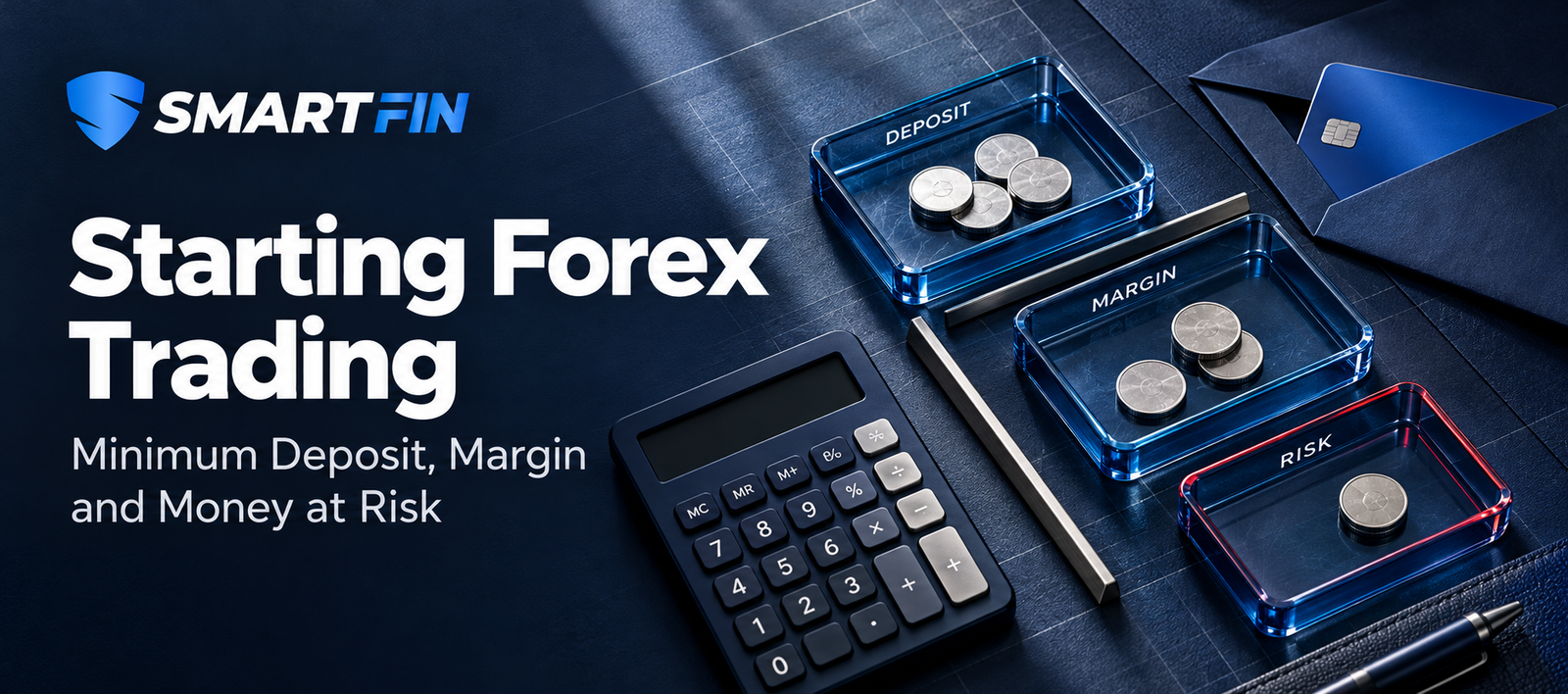
The minimum deposit is the amount an account or payment method requires. Required margin supports an open position. Planned trade risk estimates what a particular adverse move would cost, including the intended exit and relevant charges.
These amounts can differ significantly. Having enough margin to open a trade does not mean the potential loss fits your budget. SmartFIN's margin and leverage guide explains the account figures involved.
A small-account example
Assume a hypothetical EUR/USD contract has these specifications:
- One lot represents 100,000 euros.
- The minimum trade is 0.01 lot, representing 1,000 euros.
- One pip is 0.0001 dollars per euro.
- The account is denominated in US dollars.
For that contract, 0.01 lot has a pip value of approximately $0.10. A planned exit 50 pips from entry therefore represents approximately $5 of price risk before costs and slippage.
On a $100 account, that planned price loss equals 5% of the balance. A small numerical volume can still create substantial relative risk. If the contract does not permit a smaller size, the desired trade may be incompatible with the account and its risk budget.
These figures are an arithmetic illustration, not SmartFIN account specifications or a recommended trade.
Work backwards from the intended loss
For a simple pip-based example:
Approximate price risk = stop distance in pips × pip value for the selected volume.
Add applicable costs and consider how slippage could change the result. Then check the required margin and remaining free margin. If the resulting exposure is too large, choose a smaller permitted volume, reconsider the trade or continue practicing without live funds.
Moving the stop closer solely to fit a budget changes the trade itself. The exit should reflect the trading idea and market conditions, not only the desired cash loss.
Costs matter more when capital is limited
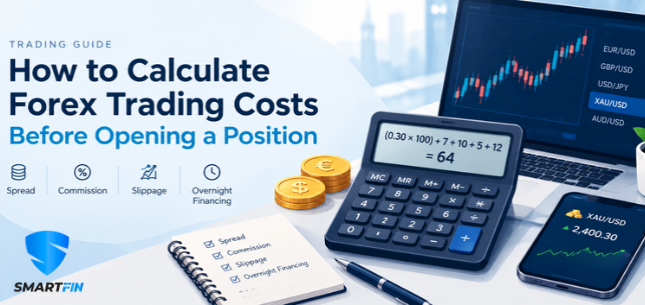
Commission, spreads, financing and currency conversion can consume a larger proportion of a small balance. Frequent trades can accumulate costs even when individual charges appear modest.
Compare the full cost of forex trading and request the actual account schedule. Also allow for several simultaneous positions and correlated market exposure.
Can I start with $100?
Some providers may permit it. That does not establish whether their minimum trade sizes and charges fit your planned activity.
Does higher leverage make a small account safer?
It can reduce margin for the same exposure. It does not reduce the price loss on an unchanged position.
What is SmartFIN's minimum deposit?
Request the current requirement for the exact provider, account, and payment method. This guide does not assume a universal amount.
Next step: Request account specifications from SmartFIN and test your calculations on a demo account before funding.
Examples are hypothetical. Leveraged trading can result in substantial losses, and an ordinary stop-loss does not guarantee its execution price.